Málaga · Ronda · Seville · Córdoba · Granada
Andalusia itinerary in 3 weeks: Málaga, Ronda, Seville, Córdoba and Granada
A 20-night Andalusia trip through five places, by bus and train.
20 nights, 5 stops Best time to travel: April, May and October
Best time to go, weather and road tips
-
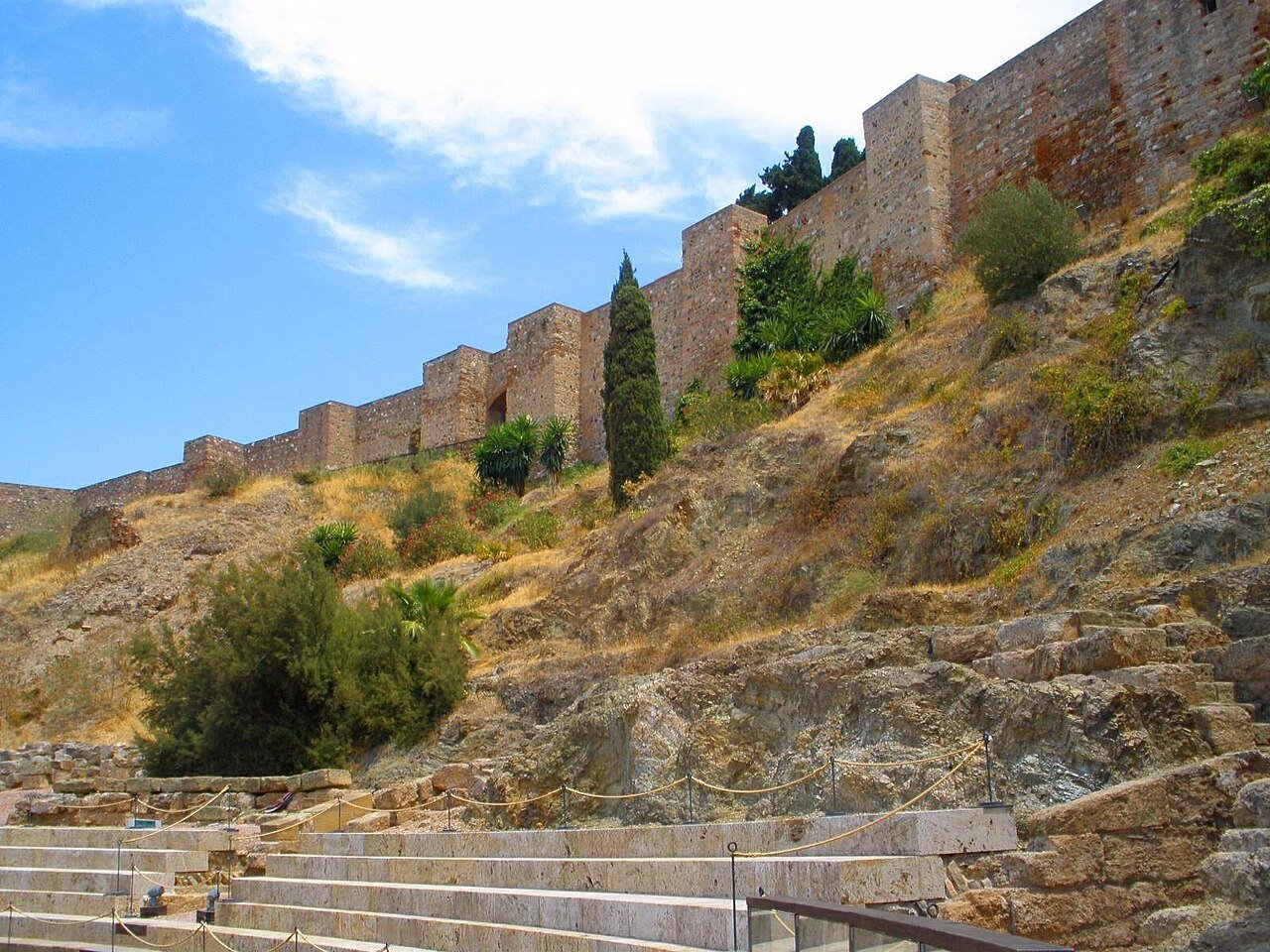
Photo: Zarateman, CC0 1.0, cropped Málaga
4 nights
You can spend four nights in Málaga and see both the old town and the beach. In the middle of the city on a hill sits the Alcazaba. This Arab fortress was built in the 11th century. The Castillo de Gibralfaro stands above it and dates from the 14th century. From there you can look out over the city and the sea. At the bottom of the Alcazaba is the Roman theatre. For many years it was covered up under the ground. People only found it in 1951.
Picasso came from Málaga and was born there. You can visit the Museo Picasso in the Palacio de Buenavista. This palace was built in the Renaissance style. Inside you will see more than 200 paintings and works by Picasso. The people who live in Málaga have a nickname for the cathedral. They call it "La Manquita" because one of its towers was left unfinished. When you want to go swimming you can go to Playa de La Malagueta. This is the city beach and it is right by the port.
Good areas to stay
- Old town (Centro Histórico)
- You can walk to the Alcazaba, the cathedral and the Picasso museum. They are all close by. In the evening, people come to the streets near Calle Larios. They go there to eat tapas.
- Soho
- You will find a central area full of paintings on the outside walls of buildings. There is also a museum here that shows contemporary art.
- Pedregalejo
- This area is an old fishing neighbourhood. It sits by the sea to the east of the city. People come here for sardines that are grilled and served on skewers. You can reach the centre of town by taking the bus.
On to Ronda: about 1 h 45 by bus
-
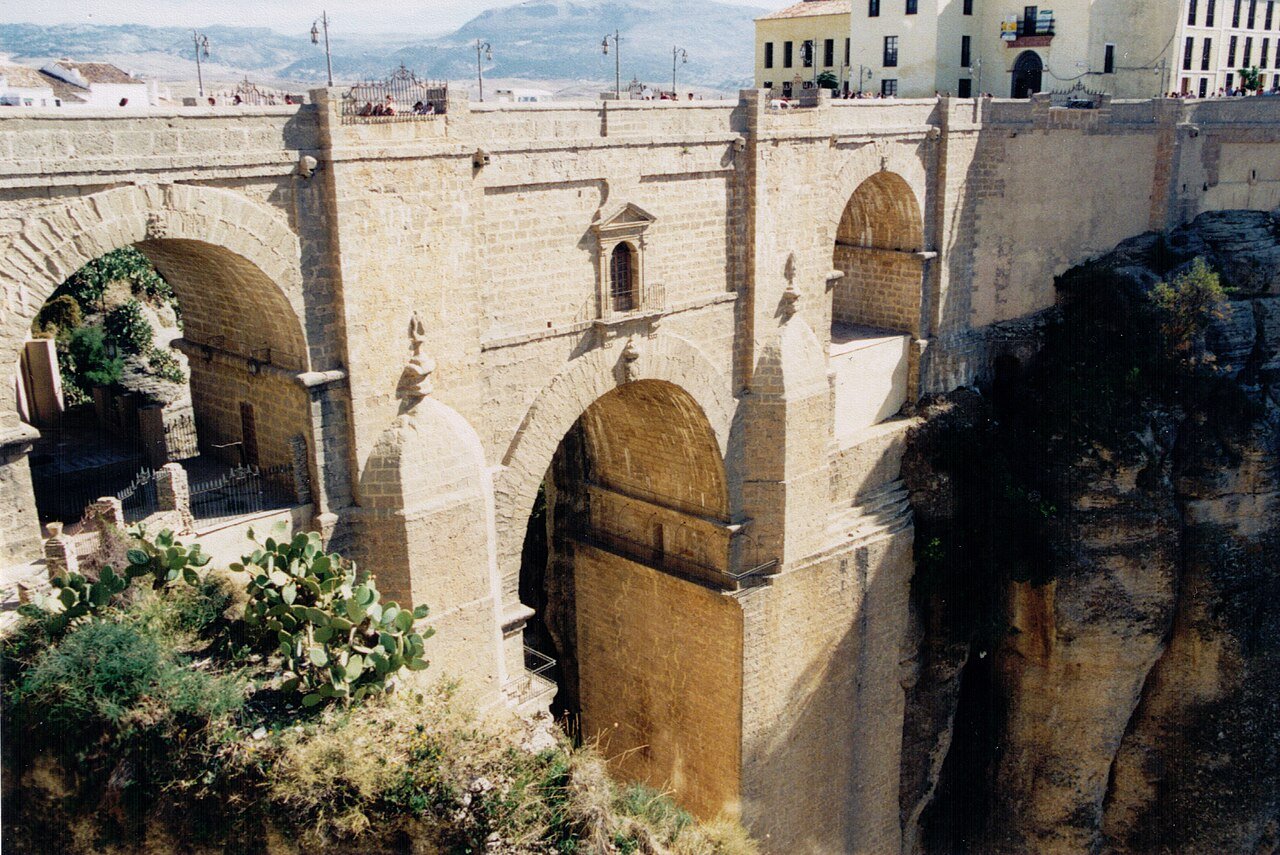
Photo: Wzwz, CC0 1.0, cropped Ronda
3 nights
Ronda sits on both sides of the Tajo. This gorge drops down more than 100 metres. The old town of La Ciudad is on the south side. It has streets laid out in a medieval style. On the north side you find the newer area called El Mercadillo. The Puente Nuevo was built in the 18th century. It connects these two parts of the town. The bridge reaches 98 metres high in some spots. It stretches 70 metres long.
You can see a bullring in the Mercadillo. It was built in 1785 and ranks as one of Spain's oldest. The Museo Taurino sits beneath the stands. You can walk along Paseo de Blas Infante. You can also visit the Mirador de los Reyes Católicos. From these places you see views across the Guadalevín valley. If you stay for three nights you have time to hike. You can also explore the white villages in the Serranía de Ronda. Many day-trippers arrive during daylight hours. They come up from the Costa del Sol. This happens especially during the hottest months of summer.
Good areas to stay
- La Ciudad
- The southern area south of the gorge has an old Moorish section that has been largely preserved. You can walk to the train station in roughly 20 minutes.
- El Mercadillo
- The area to the north of the gorge is the newer section. You will find the bus station here. You will also find the train station here. Most of the shops are located in this part of town.
On to Seville: about 2 h 30 by bus
-
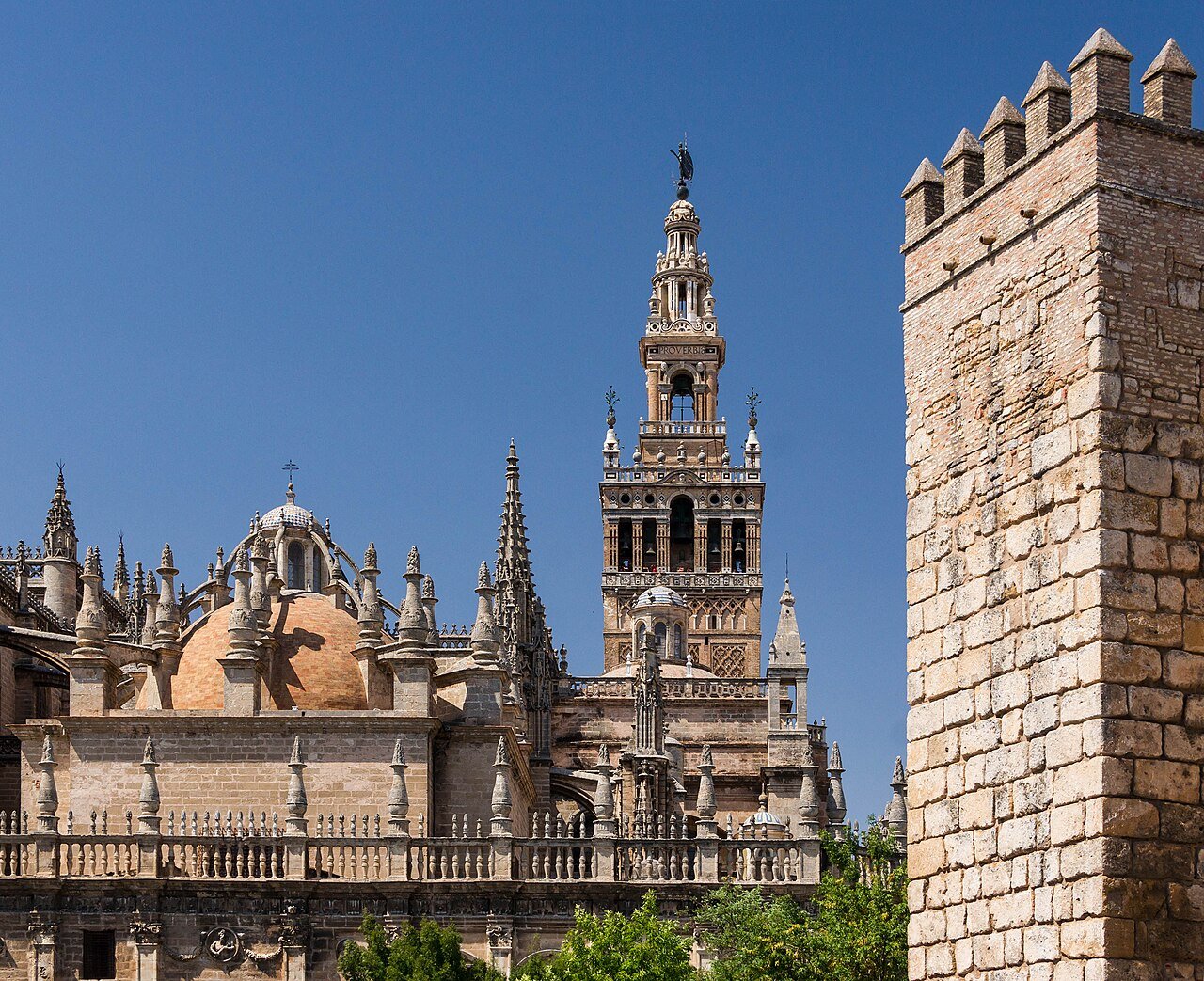
Photo: Jebulon, CC0 1.0, cropped Seville
5 nights
You can see the main sights and explore different areas in five nights in Seville. The cathedral, the Real Alcázar and the Archivo de Indias are near each other. These three buildings became a UNESCO World Heritage site in 1987. Europe's biggest Gothic building is the cathedral. Christopher Columbus is buried in the cathedral. The Giralda is the cathedral's tower. It used to be the minaret of an old mosque.
The Real Alcázar is a group of palaces surrounded by walls. In the 14th century Pedro I took an older Almohad building and had it rebuilt as a palace for the king. You can buy tickets at a desk on Patio de Banderas or you can buy them online. The Ibero-American Exposition of 1929 led to the building of Plaza de España. Painted ceramic benches sit around the plaza. Each bench shows a different province of Spain. On the other side of the river is Triana. For many centuries Triana has been where potters work.
Good areas to stay
- Barrio Santa Cruz
- You will find the historic Jewish quarter with its narrow streets. It sits to the east of the cathedral. You can reach most places easily from here, but this is also the area where you will encounter the most tourists in the city.
- Triana
- On the other side of the river from downtown, you will find numerous pottery studios and stores.
- Alameda de Hércules
- There is a square in the northern part of the old town. It is not as crowded with tourists as other areas. You will find many bars here. If you want to sleep early, you should request a room that faces the back of the building.
On to Córdoba: about 45 min by train
-
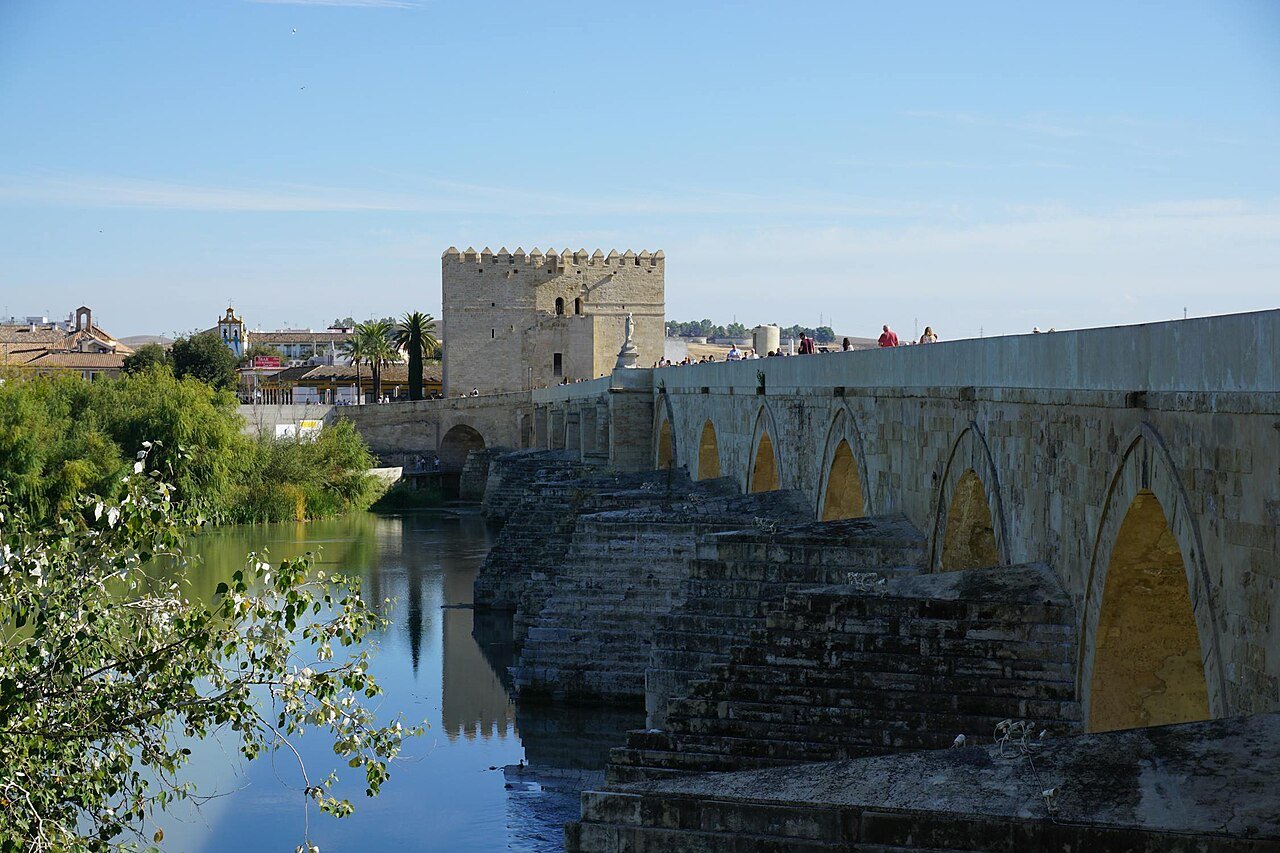
Photo: Leyipe213, CC0 1.0, cropped Córdoba
3 nights
You can spend three nights in Córdoba and see the old town, which is a UNESCO World Heritage site. The Mezquita-Catedral sits in the middle of the old town. Abd al-Rahman I built the mosque in the 8th century. People added to it many times after that. In the 13th century Ferdinand III changed it into a cathedral. Inside you will see columns standing very close together. Red and white striped arches go above them. You can go up the bell tower at certain times.
The Judería is west and north of the Mezquita. It has very narrow lanes and a synagogue. The Roman Bridge is behind the Mezquita. It goes across the Guadalquivir. In May there is the Festival de los Patios. During this time many people in the city open their courtyards to visitors. These courtyards are full of flowers. Medina Azahara is about 10 km outside the city. It is the ruins of the old caliphs' city. It became a World Heritage site in 2018. You can take a bus to get there.
Good areas to stay
- Judería
- You will find small streets just to the west and north of the Mezquita. The main things to see are right near where you are staying.
- Around Plaza de las Tendillas
- The section that is more modern sits to the north of the historic centre. It is positioned near where you will find the train and bus stations.
- San Lorenzo and Santa Marina
- The old neighbourhoods are among the most famous areas where you can find tapas, together with the old town.
On to Granada: about 1 h 50 by train
-
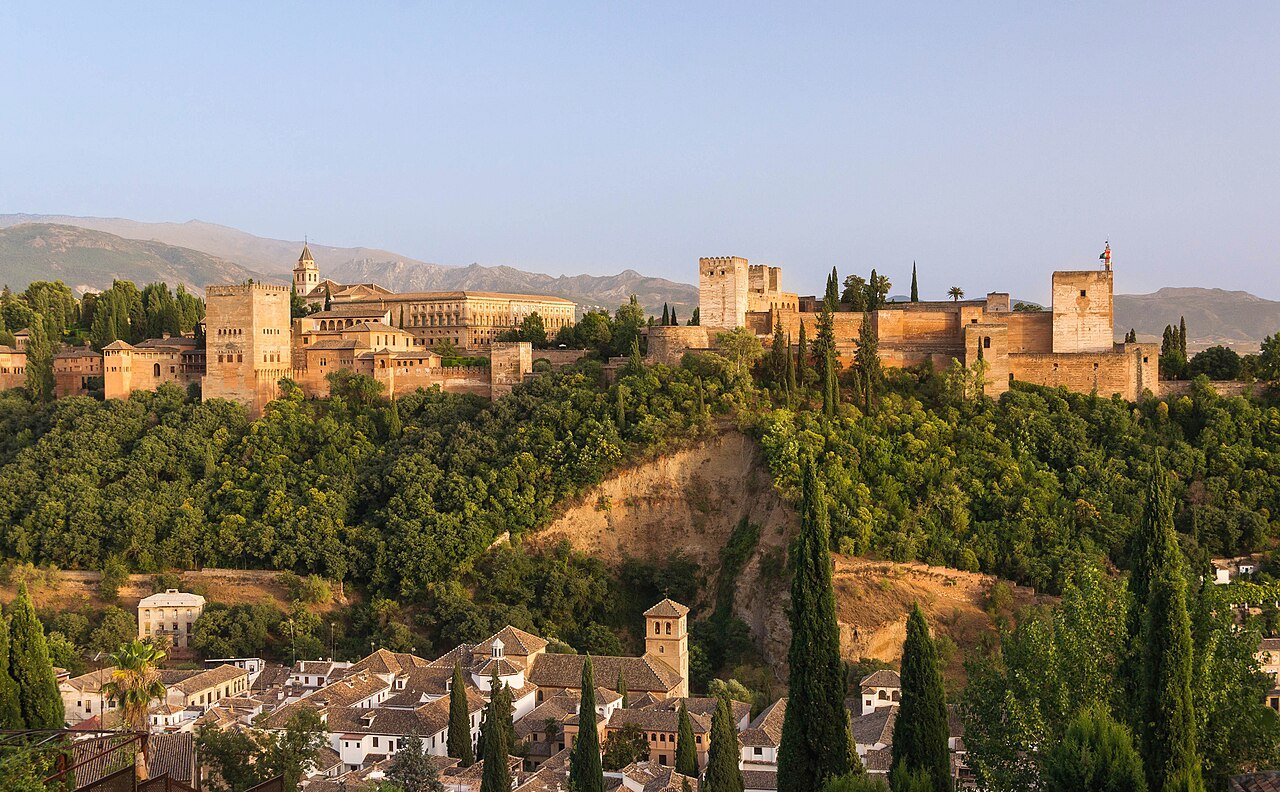
Photo: Jebulon, CC0 1.0, cropped Granada
5 nights
Granada sits at the base of the Sierra Nevada. In 1492 the Catholic Monarchs took it as their last city. Two hills above Granada hold the Alhambra and the Albaicín. These two places and the Generalife gardens together form a UNESCO World Heritage site. The Alhambra is a palace city built by the Nasrids. It contains a fortress, palaces and gardens. You need about three hours to visit it. Your ticket shows a specific time when you can enter the Nasrid Palaces. If you do not go in at that time, you cannot visit them. Many people want to go there, so you should buy your tickets early from the official website.
The Albaicín has steep lanes and stairways that go uphill. The Mirador de San Nicolás is a viewpoint where you can see the Alhambra across the way. You can spend five nights here and see the cathedral, the Albaicín and Sacromonte. Small city buses run through the area and help you avoid the steep climbs.
Good areas to stay
- Albaicín
- You will find an old Moorish neighbourhood that looks out toward the Alhambra. Many narrow streets go up at sharp angles. Stairs and stone paths cover the ground. The walk uphill will tire you out.
- Centre around the cathedral and Plaza Nueva
- The city centre is full of activity. You will find shops, bars and restaurants here. If you start at Plaza Nueva, you can walk straight up into the Albaicín.
- Realejo
- This area was once home to many Jewish people. Today it is peaceful and calm. It sits at the bottom of the hill where the Alhambra stands. You will find gardens as you walk through the tight, narrow streets.
Good to know
Your journey begins in Málaga on the Mediterranean coast. It then goes through Ronda in the mountains before reaching Seville, Córdoba and Granada. You will travel by bus until you get to Seville. After that you will use the train instead. When you are ready to fly home you take the bus from Granada back to Málaga. This journey takes about 1 h 30. From Málaga airport you can fly to Frankfurt, Munich, Vienna and Zurich, among other places.
Best time to visit Andalusia
The average daily high for each month and how often it rains. The sun marks a dry month, not hours of sunshine.
- dry, fewer than 4 rainy days
- 4 to under 8 rainy days
- 8 to under 12 rainy days
- 12 or more rainy days
- Jan: 17 degrees, 5.4 rainy days
- Feb: 18 degrees, 4.6 rainy days
- Mar: 20 degrees, 5.1 rainy days
- Apr: 22 degrees, 4.4 rainy days
- May: 25 degrees, 3.2 rainy days
- Jun: 29 degrees, 0.6 rainy days
- Jul: 31 degrees, 0.0 rainy days
- Aug: 31 degrees, 0.4 rainy days
- Sep: 28 degrees, 2.3 rainy days
- Oct: 24 degrees, 4.5 rainy days
- Nov: 20 degrees, 5.4 rainy days
- Dec: 18 degrees, 5.6 rainy days
Exact figures
Average daily highs and lows 1991–2020, precipitation as monthly total.
| Jan | Feb | Mar | Apr | May | Jun | Jul | Aug | Sep | Oct | Nov | Dec | |
|---|---|---|---|---|---|---|---|---|---|---|---|---|
| Daily high (°C) | 17.4 | 18.1 | 19.9 | 21.9 | 24.8 | 28.5 | 30.9 | 31.4 | 28.4 | 24.4 | 20.4 | 18.0 |
| Daily low (°C) | 8.1 | 8.6 | 10.3 | 12.0 | 14.9 | 18.6 | 21.1 | 21.8 | 19.2 | 15.5 | 11.5 | 9.2 |
| Precipitation (mm) | 62.3 | 58.9 | 66.1 | 41.4 | 23.1 | 4.4 | 0.1 | 2.7 | 25.2 | 60.8 | 79.3 | 87.9 |
| Days with at least 1 mm | 5.4 | 4.6 | 5.1 | 4.4 | 3.2 | 0.6 | 0.0 | 0.4 | 2.3 | 4.5 | 5.4 | 5.6 |
| Month | High (°C) | Low (°C) | Precip. (mm) | Days ≥ 1 mm |
|---|---|---|---|---|
| Jan | 17.4 | 8.1 | 62.3 | 5.4 |
| Feb | 18.1 | 8.6 | 58.9 | 4.6 |
| Mar | 19.9 | 10.3 | 66.1 | 5.1 |
| Apr | 21.9 | 12.0 | 41.4 | 4.4 |
| May | 24.8 | 14.9 | 23.1 | 3.2 |
| Jun | 28.5 | 18.6 | 4.4 | 0.6 |
| Jul | 30.9 | 21.1 | 0.1 | 0.0 |
| Aug | 31.4 | 21.8 | 2.7 | 0.4 |
| Sep | 28.4 | 19.2 | 25.2 | 2.3 |
| Oct | 24.4 | 15.5 | 60.8 | 4.5 |
| Nov | 20.4 | 11.5 | 79.3 | 5.4 |
| Dec | 18.0 | 9.2 | 87.9 | 5.6 |
- Jan: 16 degrees, 5.9 rainy days
- Feb: 18 degrees, 5.3 rainy days
- Mar: 22 degrees, 5.5 rainy days
- Apr: 24 degrees, 6.0 rainy days
- May: 28 degrees, 4.2 rainy days
- Jun: 32 degrees, 1.0 rainy days
- Jul: 36 degrees, 0.1 rainy days
- Aug: 36 degrees, 0.4 rainy days
- Sep: 31 degrees, 2.8 rainy days
- Oct: 26 degrees, 6.3 rainy days
- Nov: 20 degrees, 6.1 rainy days
- Dec: 17 degrees, 6.5 rainy days
Exact figures
Average daily highs and lows 1991–2020, precipitation as monthly total.
| Jan | Feb | Mar | Apr | May | Jun | Jul | Aug | Sep | Oct | Nov | Dec | |
|---|---|---|---|---|---|---|---|---|---|---|---|---|
| Daily high (°C) | 16.2 | 18.2 | 21.5 | 23.7 | 27.8 | 32.4 | 35.7 | 35.6 | 31.1 | 26.0 | 20.1 | 16.8 |
| Daily low (°C) | 6.1 | 7.0 | 9.5 | 11.5 | 14.7 | 18.2 | 20.4 | 20.6 | 18.2 | 14.7 | 10.0 | 7.4 |
| Precipitation (mm) | 56.3 | 46.2 | 46.9 | 54.0 | 33.9 | 5.8 | 0.6 | 2.5 | 33.1 | 75.4 | 72.2 | 77.2 |
| Days with at least 1 mm | 5.9 | 5.3 | 5.5 | 6.0 | 4.2 | 1.0 | 0.1 | 0.4 | 2.8 | 6.3 | 6.1 | 6.5 |
| Month | High (°C) | Low (°C) | Precip. (mm) | Days ≥ 1 mm |
|---|---|---|---|---|
| Jan | 16.2 | 6.1 | 56.3 | 5.9 |
| Feb | 18.2 | 7.0 | 46.2 | 5.3 |
| Mar | 21.5 | 9.5 | 46.9 | 5.5 |
| Apr | 23.7 | 11.5 | 54.0 | 6.0 |
| May | 27.8 | 14.7 | 33.9 | 4.2 |
| Jun | 32.4 | 18.2 | 5.8 | 1.0 |
| Jul | 35.7 | 20.4 | 0.6 | 0.1 |
| Aug | 35.6 | 20.6 | 2.5 | 0.4 |
| Sep | 31.1 | 18.2 | 33.1 | 2.8 |
| Oct | 26.0 | 14.7 | 75.4 | 6.3 |
| Nov | 20.1 | 10.0 | 72.2 | 6.1 |
| Dec | 16.8 | 7.4 | 77.2 | 6.5 |
Through the year
- Jul, Aug: The warmest time of year in Seville happens during July and August. Source: AEMET (Fuente: AEMET), accessed 12 Oct 2026
Summarised and translated for this page from the linked sources.
Monthly values Málaga Airport: WMO Member Nations (2023). WMO Climatological Standard Normals for 1991-2020 (NCEI Accession 0253808). Version 6.6, min24, WMO station 08482, TMAX TMIN PRCP DP01. NOAA National Centers for Environmental Information. Dataset. https://doi.org/10.25921/800j-vn07. Accessed 12 Oct 2026.
Monthly values Seville San Pablo: WMO Member Nations (2023). WMO Climatological Standard Normals for 1991-2020 (NCEI Accession 0253808). Version 6.6, min24, WMO station 08391, TMAX TMIN PRCP DP01. NOAA National Centers for Environmental Information. Dataset. https://doi.org/10.25921/800j-vn07. Accessed 12 Oct 2026.
The stops and nights are already filled in. You add your travel dates, the briefing finds the places to stay.
Turn this route into your own briefingDestination texts created with AI.
As of 12 Oct 2026